Syncope testing
Tilt-Table Study in Reseda, CA
A tilt-table study helps show how the body responds to a change from lying flat to a near-upright position. It is used for some patients who have had syncope (fainting). The physician decides whether this test is appropriate.
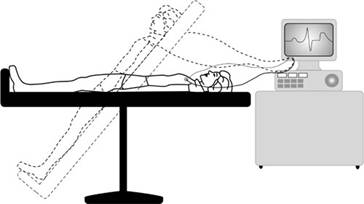
What the test is looking for
The patient lies on a table that can be moved to a nearly upright position while heart rate, blood pressure, and symptoms are monitored. An electrocardiogram is recorded. The goal is to see whether an upright position reproduces fainting or related symptoms and how the pulse and blood pressure respond.
How the test is performed
The patient is secured on the table lying flat, then the table is tilted to an almost upright position. Recovered Tests education stated that patients are often suspended at sixty to eighty degrees and are instructed not to move. Symptoms, blood pressure, pulse, ECG, and oxygen saturation are recorded.
A recovered tilt-table instruction page described an IV lock, then 70 degrees for 45 minutes without shifting weight. The test ends if the patient faints or has significant symptoms, or after a set time — recovered text said that period usually ranges from 20 to 45 minutes.
Preparation notes from recovered education
Patients may be asked to fast the day of or the day before the test. One recovered instruction set said nothing by mouth after midnight for a morning procedure, and a clear-liquid breakfast (tea, broth, gelatin, apple juice) for an afternoon procedure.
That same sheet said to wear comfortable shoes, take medications as usual, and expected 45 minutes to one hour. It also stated a ride home is not required. Confirm every item with the office — prep and ride rules can change and are flagged for physician approval.
What is watched afterward
Recovered post-procedure notes listed continued watching of blood pressure, heart rate, and EKG, and close observation of consciousness and arrhythmia.
If you faint during the test, the table is returned to flat and the team supports you as directed by the protocol.
How results may be used
Findings may support a reflex (non-heart-block) cause of fainting or prompt more rhythm evaluation. A tilt-table study does not replace Holter monitoring, an EP study, or a loop recorder when those are the right tools.
When to contact the office
Call if you were referred for a tilt-table study after fainting. Call 911 if you have a new fainting spell with chest pain or injury.