Outpatient ECG testing
24-Hour Holter Monitoring in Reseda, CA
A Holter monitor is a small recorder worn during usual daily activity so a physician can review the heart’s rhythm over a longer period than a standard EKG. It is also called ambulatory electrocardiography.
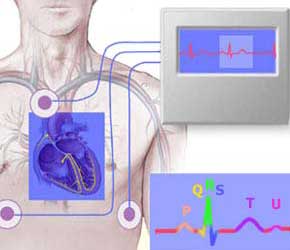
What a Holter monitor is
A Holter monitor continuously records the heart’s rhythms. Recovered education described a battery-operated recorder worn for 24 hours, and sometimes 24 to 48 hours, while the patient performs usual daily activities.
Electrodes (small conducting patches) are placed on the chest and attached to the recorder, which is carried in a pocket or a pouch at the waist or neck. Recovered Tests education mentioned three to seven electrodes.
How the test is performed
While you wear the monitor, it records the heart’s electrical activity. You keep a diary of activities such as sleeping or eating, and of symptoms, so the physician can match events with the recording. Accurate notes are important.
After the wearing period, you return the monitor to the office. The physician reviews the record for irregular rhythms or other changes.
How to prepare, and how it feels
There is no special diet preparation. Shower or bathe before the monitor is applied; you will not be able to shower or bathe while wearing it. Tell the staff if you are allergic to tape or adhesives. Some people need a small area of chest hair shaved so electrodes will stick.
The test is painless. Keeping the monitor close to the body can make sleeping uncomfortable for some people. Continue normal activities unless you are told otherwise. You will be shown how to replace an electrode if one becomes loose.
Why the test may be ordered
Holter monitoring is used to see how the heart responds to normal activity. Recovered pages listed uses when starting a new heart medicine, after a heart attack, and to diagnose heart rhythm problems.
Conditions mentioned as possible diagnostic questions included atrial fibrillation or flutter, multifocal atrial tachycardia, paroxysmal SVT, palpitations, and reasons for fainting. A Holter can also show every beat over the recording period, including changes that may suggest ischemia in some patients — a physician interprets those findings.
Special considerations from recovered education
Electrodes must stay firmly attached. Do not let the monitor get wet. Recovered Holter instructions also said to avoid magnets, metal detectors, electric blankets, and high-voltage areas, and to limit small electrical devices such as electric toothbrushes or razors while wearing the device.
These precautions are historical patient instructions and should be confirmed with the office for the specific monitor you are given.
What results can mean
Normal variations in heart rate occur with activity. A physician looks for significant rhythm changes. Abnormal results may include various arrhythmias. Changes in the usual wave pattern may mean the heart is not getting enough oxygen — only a physician should interpret that.
A Holter may miss a problem that occurs less often than every day or two. An event monitor may be discussed when symptoms are less frequent.