Heart rhythm procedure topic
Electrophysiology Study (EP Study) in Reseda, CA
An electrophysiology study is a detailed way to look at the heart’s electrical system. Electrode catheters can sense activity in different parts of the heart and deliver tiny pacing impulses. Whether an EP study is appropriate depends on symptoms, prior tests, and a physician’s evaluation.
What an EP study is
Normally, electricity flows through the heart in a regular pattern that produces coordinated contractions. A problem along that pathway can cause an arrhythmia. An EP study is designed to diagnose the precise electrical cause so treatment options can be discussed.
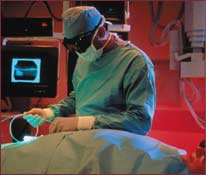
Special electrode catheters are inserted, often from the groin, and advanced to the heart while staff watch their position on imaging. The catheters measure how impulses travel and can pace the heart so certain arrhythmias can be observed in a controlled lab.
Why an EP study may be discussed
Brief tests such as a standard EKG may miss intermittent arrhythmias. Even longer recordings such as Holter monitoring may not capture an event. During an EP study, a specialist may provoke arrhythmia events and collect data during those events.
Recovered education listed these reasons: to diagnose the cause of lightheadedness, dizziness, palpitations, or fainting; to pinpoint a known arrhythmia and discuss treatment; to see how certain medications are working; to assess severity and future cardiac-event risk; and to help decide whether a pacemaker, defibrillator, or ablation should be discussed.
Preparation discussed in recovered education
Recovered pre-test guidance asked patients not to eat or drink for 6 to 8 hours before the study, with small sips of water for medications if allowed. Some medications may be stopped for a few days if the physician instructs that. Arrange a ride home; patients are typically not allowed to drive after sedation.
Tell the team about prior reactions to medications or anesthesia and any bleeding history. Empty your bladder before the procedure; a urinary catheter is sometimes used. These are historical prep notes and must be confirmed with the treating physician — they are flagged for approval.
What patients can generally expect
You may arrive the morning of the study or the night before. Routine tests such as an ECG, x-rays, or blood work may be done. After consent, the insertion site — often the groin — is cleaned. An IV and a sedative are typically used.
Recovered education stated the study may take about one to four hours. Patients remain still afterward so the entry site can begin to heal. The electrophysiologist leads a team in an EP lab, usually in a hospital. Complications can occur; the physician should explain risks and alternatives.
How results may be used
Mapping data can help locate tissue that gives rise to abnormal impulses. Sometimes medication response is tested. In some cases a physician may proceed to ablation or discuss a pacemaker or ICD based on findings and prior counseling.
An EP study does not guarantee a diagnosis or a specific treatment. Call the office to ask whether evaluation related to an EP study is available through this practice.
When to contact a physician
Call our Reseda office if you were referred for an EP study discussion. For emergencies, call 911.